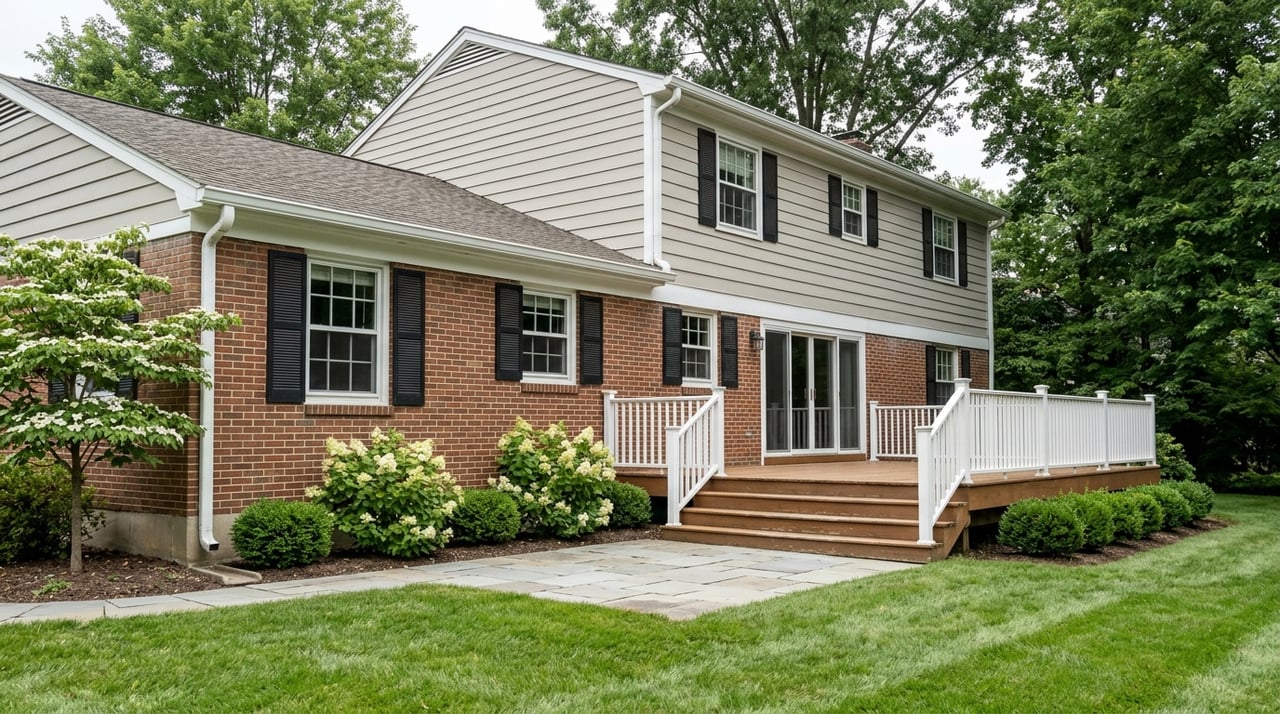
Are all single-family homes in Lower Macungie basically the same? Not even close. If you are searching in the 18011 area, you may be comparing a home on a larger lot in Lower Macungie with a smaller-lot property in Alburtis or a newer home in a planned subdivision, and those options can feel very different once you look past the price. This guide will help you understand how lot size, neighborhood design, utilities, maintenance, and daily convenience can shape your experience as a homeowner. Let’s dive in.
Lower Macungie and 18011 Basics
If you are looking at single-family homes in Lower Macungie, it helps to know that the 18011 ZIP code is Alburtis, and both Alburtis and Lower Macungie are in Lehigh County. They are close to each other, but they do not offer the same housing feel.
Lower Macungie covers about 22.37 square miles, while Alburtis is much smaller at about 0.7 square miles. In Lower Macungie, the owner-occupied housing rate is 85.8%, the median value of owner-occupied homes is $406,500, the median household income is $125,230, and the mean travel time to work is 27.0 minutes. Those numbers help explain why many buyers see the area as a strong single-family home market with a range of suburban options.
How Lower Macungie Developed
Lower Macungie’s housing story starts with farmland and shifts into suburban growth. According to the township’s history, major development picked up in the early 1960s, with early large neighborhoods such as Ancient Oak, Shepherd Hills, and Ancient Oak West.
That mix still shows today. You can find older farm-era features like stone farmhouses, bank barns, and older homes, but you can also find more conventional suburban neighborhoods that grew as roads and sewer service expanded. This is one reason single-family homes in Lower Macungie can vary so much from one area to the next.
Alburtis has a different pattern. Its history is tied to the railroad and a long-standing borough center, which tends to create a more compact, in-town feel with smaller lots than many parts of the township.
Single-Family Lot Sizes Vary Widely
One of the biggest surprises for buyers is how much lot size can change depending on the zoning district. In Lower Macungie, single-family detached homes can sit on everything from compact suburban lots to much larger rural parcels.
Here is a simple way to think about the common patterns:
Rural lots offer more land
In the R-Rural district, single-family detached homes require at least 2 acres and 150 feet of lot width. This is the most land-intensive single-family pattern in the township.
If you want more space between homes, this type of setting may appeal to you. At the same time, more land usually means more yard work, more exterior upkeep, and more attention to drainage and site conditions.
Semi-rural lots balance space and convenience
In the SR-Semi-Rural district, single-family homes require at least 18,000 square feet and 100 feet of lot width. This often feels like a middle ground between acreage living and a more standard suburban neighborhood.
For many buyers, this can be a practical compromise. You may get a more open feel without taking on the full maintenance demands of a two-acre property.
Suburban lots are more typical
In the S-Suburban district, single-family detached homes require at least 12,000 square feet and 80 feet of width. This is closer to what many buyers picture when they think of a classic suburban single-family neighborhood.
These lots can offer usable outdoor space while keeping maintenance more manageable. They are often a good fit for buyers who want room to spread out without a very large yard to maintain.
Urban lots are more compact
In the U-Urban district, single-family detached homes require at least 6,000 square feet and 60 feet of width. This is the most compact single-family pattern in the township.
Smaller lots can mean less mowing and less exterior upkeep. They can also mean tighter setbacks and a closer relationship to neighboring homes and community design standards.
Alburtis follows its own pattern
In Alburtis R-1, single-family detached homes require at least 8,000 square feet and 80 feet of lot width. The borough also requires connection to existing public centralized water and sewer systems.
That can make Alburtis appealing if you want a more compact borough setting with public utilities. It also means ownership comes with a different set of expectations than a larger-lot township property.
Newer Subdivisions Feel Different
Not all single-family neighborhoods are shaped the same way. In newer Lower Macungie developments, planning standards encourage interior street networks, reduce dependence on cul-de-sacs, and place homes, streets, and lots around greenway land, trails, and common greens.
The township also uses design guidelines that can govern things like architecture, materials, rooflines, lighting, landscaping, public space, and trail features. For you as a buyer, that means newer subdivisions may feel more coordinated and more structured than older neighborhoods.
This can be a plus if you like a polished, planned look. It can also mean more rules or design expectations than you would find in an older area with a less uniform layout.
Daily Life Depends on Location
A single-family home is more than the house itself. Your daily routine is also shaped by parks, roads, community facilities, and how connected the area feels.
Parks and trails add value to daily routines
Lower Macungie maintains 26 parks. Amenities include basketball courts, tennis and pickleball courts, disc golf, playgrounds, walking trails, fishing areas, a skate park, and a dog park.
The township’s Greenway Plan also aims to build green corridors and trail networks that improve pedestrian connections and offer alternate transportation options. If you enjoy outdoor time close to home, that can be an important part of the single-family living experience here.
Alburtis offers its own smaller-scale amenity mix. The borough highlights basketball and hockey courts, a playground, a baseball field, and access to Lockridge Park, which includes trails, fishing, bluebells, and history-related programming.
Community facilities matter too
East Penn School District serves both communities, and its directory includes Lower Macungie Middle School and Alburtis Elementary School. Lower Macungie also notes the Township Community Center and Library, along with a municipal swimming pool at the Brookside Road offices.
These kinds of everyday features often influence how convenient an area feels once you move in. They may not change the square footage of a house, but they can shape how you use your time.
Commute corridors affect feel
Route 100 and Hamilton Boulevard follow historic travel corridors, and township planning also identifies U.S. Route 22, Route 100, and Hamilton Boulevard as key transportation corridors. Some neighborhoods feel more commuter-oriented because of that access, while others feel more tucked away.
If commute time and road access matter to you, this is worth paying attention to as you compare homes. Two properties with similar features can feel very different depending on how directly they connect to those major routes.
Maintenance Tradeoffs to Expect
For many buyers, the real difference between one single-family home and another is not just layout or price. It is the level of maintenance, oversight, and site responsibility that comes with the property.
In Lower Macungie, zoning applies to items like additions, decks, fences, patios, pools, and sheds. That means exterior projects may require a zoning check before work begins.
Site conditions can matter too. Township subdivision standards require developers to account for floodplains, wetlands, steep slopes, stormwater, and sewage disposal options, so the usable part of a lot may not always match what you assume from its total size.
That is especially important when you are comparing larger parcels. More land can offer privacy, but it can also bring more mowing, drainage questions, and maintenance responsibilities.
Utilities and Services Are Worth Verifying
Utility service is one of the most important practical questions to ask when buying a single-family home in this area. Lower Macungie planning standards contemplate both public sewer service and individual on-lot sewage disposal systems, so you should confirm whether a home uses public utilities or private systems.
The township’s welcome information also notes that some apartments, condominiums, and private communities are not in the township waste program. If you are looking in a neighborhood with HOA-style features or shared services nearby, it is smart to verify trash rules and service expectations.
Alburtis is more straightforward in this area. Its R-1 district requires connection to public centralized water and sewer systems, which may simplify utility planning for some buyers.
Older Homes Versus Newer Homes
A helpful way to compare homes in Lower Macungie and Alburtis is to think in terms of older farm-era or early suburban homes versus newer planned subdivisions. Each comes with its own advantages.
Older homes may offer more land, mature settings, and unique construction details. Newer neighborhoods may offer more standardized lots, stronger design controls, and shared amenities built into the community layout.
Neither is automatically better. The better fit depends on how much land you want, how much exterior work you are comfortable handling, and whether you prefer a more uniform neighborhood setting or a less standardized one.
What Buyers Should Compare First
If you are narrowing down single-family homes in Lower Macungie or the 18011 area, focus on the details that will affect your day-to-day life the most.
Compare these features carefully
- Lot size and usable yard area
- Public utilities versus private systems
- Road access and commute routes
- Exterior maintenance demands
- Community or neighborhood rules
- Nearby parks, trails, and local facilities
- Borough versus township setting
When you compare homes through this lens, it gets easier to see why two properties at similar price points may offer very different ownership experiences.
Why Local Guidance Helps
Because Lower Macungie and Alburtis include everything from older homes with larger lots to newer subdivisions with more structured design standards, buying here is rarely a one-size-fits-all decision. The best choice usually comes down to matching the property to your routine, priorities, and comfort level with maintenance and rules.
If you want help sorting through lot patterns, neighborhood differences, or the tradeoffs between township and borough living, working with a local advisor can save you time and help you focus on the homes that truly fit. When you are ready to talk through your options in Lower Macungie, Alburtis, or the greater Lehigh Valley, connect with Renee Marinelli.
FAQs
What makes single-family homes in Lower Macungie different from one another?
- Single-family homes in Lower Macungie can differ significantly based on zoning, lot size, utility service, neighborhood design, and whether the home is in an older area or a newer planned subdivision.
What lot sizes are common for single-family homes in Lower Macungie?
- Lower Macungie includes rural 2-acre lots, semi-rural 18,000-square-foot lots, suburban 12,000-square-foot lots, and urban 6,000-square-foot lots, depending on the zoning district.
What should buyers know about single-family homes in Alburtis 18011?
- Alburtis is a compact borough in Lehigh County with its own zoning pattern, including R-1 single-family lots of at least 8,000 square feet and required connection to public water and sewer.
What maintenance issues matter when buying a single-family home in Lower Macungie?
- Buyers should look closely at yard size, drainage, stormwater conditions, exterior project rules, and whether a property’s site conditions affect how much of the lot is truly usable.
What amenities support daily life around Lower Macungie and Alburtis?
- Lower Macungie offers 26 parks, trails, courts, playgrounds, a dog park, and community facilities, while Alburtis adds local recreation spaces and access to Lockridge Park.
What utilities should buyers verify before purchasing a single-family home in Lower Macungie?
- Buyers should confirm whether the home uses public sewer and water services or private systems, and they should also verify trash and service rules where community-managed services may apply.


