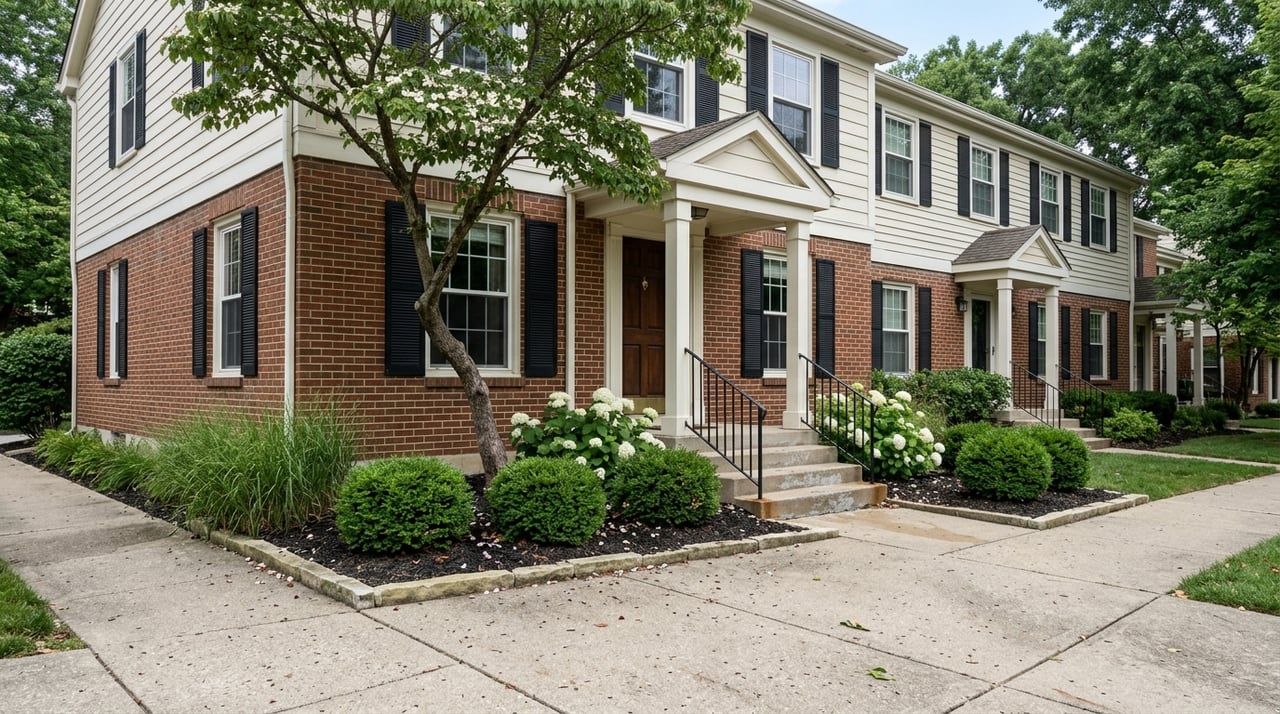
If you want less exterior upkeep without giving up space, condo and townhome living in Lower Macungie and nearby Alburtis may be worth a closer look. Many buyers are trying to balance convenience, monthly costs, commute access, and the feel of home ownership without taking on a large yard or major outside maintenance. The good news is that this part of the Lehigh Valley offers a practical middle ground, and understanding how these communities work can help you make a smarter move. Let’s dive in.
Why attached living fits here
Lower Macungie Township and Alburtis offer a suburban setting where low-maintenance housing can make a lot of sense. Census data for Lower Macungie Township shows an estimated 2024 population of 33,246, an 85.8% owner-occupied housing rate, and a median owner-occupied home value of $406,500 in 2020-2024 data. Alburtis, by comparison, is a compact borough of less than one square mile with a population of 2,572, according to the official borough website.
That mix creates an appealing option for buyers who want ownership and private living space, but not necessarily a larger lot to maintain. In this market, condos and townhomes often appeal to people who want a simpler day-to-day routine while staying connected to the area.
Lower Macungie lifestyle basics
This is not an urban high-rise condo market. Instead, Lower Macungie and Alburtis tend to offer a suburban, neighborhood-oriented version of condo and townhome living.
Lower Macungie Township planning documents describe interest in a more walkable community and identify green corridors and trail networks that support pedestrian connectivity, recreation, and alternate transportation. The same local planning information also points to strong regional access through I-78/PA 309, Route 100, the Route 222 Bypass, and the PA Turnpike Northeast Extension.
For many buyers, that means you can look for a home that reduces maintenance while still keeping you close to major roads, established neighborhoods, and everyday conveniences. If staying within the same public school system matters to your move, East Penn School District serves Alburtis, Lower Macungie Township, Macungie, Emmaus, and Upper Milford.
Alburtis also adds to the area’s small-town feel. The borough’s official site highlights local parks, courts, a playground, a baseball field, Main Street businesses, and Lockridge Park, which helps explain why attached housing here often feels more residential and community-based than dense or urban.
What condos and townhomes mean
One of the most important things to know is that a home’s appearance does not tell you the full legal story. A townhouse-style home may be part of a condominium, or it may be part of a planned community.
Under Pennsylvania law, the declaration and governing documents determine who owns which parts of the property, what counts as a common element, and what the association has the authority to maintain or regulate. HUD-recognized condominium structures can also include attached, townhouse-style dwellings, so the label on a listing should never be your only guide.
In simple terms, two homes that look similar from the street can come with very different responsibilities. That is why reviewing documents early is so important.
What these homes often offer
In this local market, attached homes are often designed to give you a balance of private space and easier upkeep. Floor plans may include features such as:
- Two or three bedrooms
- Attached one- or two-car garages
- Patios, decks, or balconies
- Sidewalk-connected settings
- Shared grounds instead of large private yards
That setup can work well if you want room to spread out but prefer to avoid as much exterior work as a traditional detached property may require. For some buyers, it is also a good fit when downsizing from a larger home or moving into the area and wanting a more manageable first step.
The maintenance tradeoff
The biggest benefit of condo and townhome living is convenience. The biggest tradeoff is that convenience usually comes with shared rules, shared costs, and shared decision-making.
Pennsylvania association law allows condo and planned-community associations to adopt rules, approve budgets and reserves, collect assessments, regulate maintenance of common elements, hire vendors, and levy reasonable fines after notice and an opportunity to be heard. That structure can be very helpful, but it also means you are buying into both a home and an association.
A monthly fee should be viewed as a service bundle, not just an extra bill. Fannie Mae notes that HOA or condo fees may cover items like landscaping, exterior maintenance, water, or sewer, while your mortgage and taxes remain separate household costs.
What your monthly fee may cover
Every community is different, so there is no one-size-fits-all answer. Still, many buyers should ask whether the fee includes:
- Snow removal
- Lawn care or landscaping
- Trash service
- Exterior maintenance
- Roof or siding replacement
- Water or sewer
- Reserve contributions for future repairs
The key is to match the fee to the value you are receiving. A higher monthly payment may still make sense if it reduces surprise expenses and cuts down on the work you would otherwise handle yourself.
Why documents matter so much
When buying a condo or townhome, the legal documents are not just paperwork. They explain the real ownership structure and can affect your monthly budget, maintenance responsibilities, and resale plans.
Under Pennsylvania’s resale certificate requirements, sellers must provide important association information such as the declaration, bylaws, rules, current assessments, unpaid special assessments, reserve information, budget, financial statements, insurance coverage, pending lawsuits, proposed capital expenditures, and known violations. That gives you a much clearer picture of how the community operates.
This review can help you avoid a mismatch between your expectations and the actual rules of the property. It can also help you understand whether the association appears stable and well-managed.
Common elements vs limited elements
This is one of the easiest places for confusion to happen. You may assume that a patio, balcony, driveway, garage, or roof belongs fully to the unit owner, but that is not always the case.
Pennsylvania law allows declarations to assign limited common elements, such as porches, balconies, and patios, to specific units. That means a space may be reserved for your use while still being treated differently than property you own outright.
Why does that matter? Because maintenance responsibility often follows that legal classification. Before you buy, you should ask exactly who is responsible for the repair, replacement, and upkeep of each feature tied to the home.
Financing can depend on the community
Your financing is not based only on your income, credit, and down payment. In some cases, the project itself can affect loan eligibility.
Fannie Mae guidance flags issues such as critical repairs, inadequate insurance, significant litigation, and hotel-like or short-term-rental activity as possible financing concerns for condo projects. Even if you love a unit, project-related issues can create delays or limit certain loan options.
That is one reason it helps to work with a local advisor who can help you spot questions early, coordinate with your lender, and keep the process moving.
Questions to ask before you buy
If you are comparing condo and townhome communities in Lower Macungie or Alburtis, these questions can help you look past the photos and focus on the details that shape daily life.
Ask what the fee covers
Get specific. Ask about snow removal, landscaping, trash, exterior maintenance, water, sewer, and reserve funding.
Ask about reserves and assessments
Review reserve balances, planned capital projects, and any current or unpaid special assessments. This can help you understand whether future costs may be coming.
Ask about rules that affect daily use
Confirm policies on pets, parking, guest parking, rentals, and exterior changes. You should also ask whether approvals are required for things like decks, fencing, satellite dishes, or HVAC work.
Ask about insurance responsibilities
Find out what the association insures and what you are expected to insure personally. The association’s policy does not replace your own coverage.
Ask about lending concerns
Check whether the community has litigation, repair issues, or insurance gaps that could affect conventional financing or other loan review.
Ask about resale-related charges
Pennsylvania law requires disclosure of certain transfer fees, resale charges, and restraints on transfer. It is better to know these details before you commit.
Ask how transparent the association is
Recent meeting minutes, budgets, and record access can give you insight into how the board communicates and plans ahead.
Who may find this lifestyle appealing
Condo and townhome living can be a strong fit if you want to simplify your routine without leaving the Lower Macungie area. It may appeal to you if you are:
- Moving from a larger home and want less exterior upkeep
- Buying your first home and want a more manageable maintenance load
- Relocating to the Lehigh Valley and want convenience near major routes
- Trying to stay in the same general area while changing your housing style
What matters most is whether the community’s structure aligns with your goals. The right fit is not just about square footage or finishes. It is also about how the rules, fees, and maintenance setup support the way you want to live.
Final thoughts on Lower Macungie condos
In Lower Macungie and nearby Alburtis, condos and townhomes are often less about urban density and more about practical suburban convenience. The appeal usually comes down to easier upkeep, attached-home layouts, and access to the wider Lehigh Valley road network, all within an established residential setting.
The most important takeaway is simple: do not rely on the label alone. A condo, townhome, or townhouse-style home can come with very different ownership and maintenance terms depending on the governing documents. If you want help comparing communities, reviewing the big-picture pros and cons, or planning your next move in the Lehigh Valley, Renee Marinelli is here to help.
FAQs
What is condo and townhome living like in Lower Macungie, PA?
- In Lower Macungie and nearby Alburtis, condo and townhome living is typically a suburban, low-maintenance ownership option with shared upkeep, neighborhood-style settings, and access to major regional roads.
What should buyers review before buying a condo in Lower Macungie?
- Buyers should review the declaration, bylaws, rules, monthly assessments, reserve information, insurance details, planned capital projects, and any special assessments or pending litigation.
What do HOA or condo fees usually cover in Lower Macungie communities?
- Fees may cover items such as landscaping, snow removal, exterior maintenance, water, sewer, trash service, or reserve funding, but coverage varies by community.
How are townhomes and condos legally different in Pennsylvania?
- In Pennsylvania, the legal documents determine ownership, maintenance responsibility, and association authority, so a townhouse-style property may still be legally structured as a condominium.
Can condo financing be harder in some Lower Macungie communities?
- Yes, financing can be affected if a project has issues such as inadequate insurance, major repairs, significant litigation, or other concerns flagged by lender guidelines.